
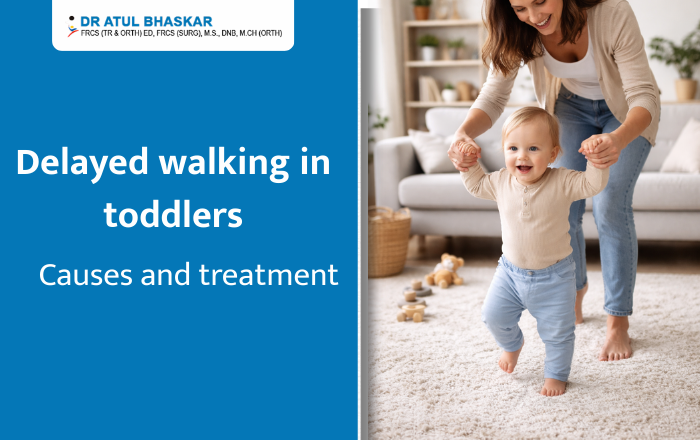
You dressed them up, you cheered them on, and you waited. But while other toddlers at the park are wobbling around on two feet, your little one is still crawling — and that quiet worry in the back of your mind is getting louder. First, take a breath. Delayed walking in toddlers is more common than most parents realize, and in many cases, it is completely treatable. This article will walk you through everything you need to know — from causes and warning signs to treatment options — so you can make the best decision for your child.
Most babies take their first steps somewhere between 9 and 12 months and are walking confidently by 14 to 15 months. The medical community considers 18 months the upper limit of the normal range. If your child is not walking by 18 months, that is the point where a specialist visit becomes important — not a reason to panic, but definitely a reason to act.
Understanding why delayed walking in toddlers happens is the first step toward finding the right solution.
1. Low Muscle Tone (Hypotonia) Some children are born with weaker muscle tone, making it harder to bear weight on their legs. You may notice floppy limbs or difficulty sitting upright for long periods.
2. Hip Dysplasia This is a condition where the hip joint does not form correctly, making it painful or difficult for a toddler to stand and walk. It is one of the most commonly missed causes of walking delay in babies and needs early orthopedic attention.
3. Club Foot or Flat Feet Structural problems in the foot — such as club foot or severely flat feet — can affect balance and make walking uncomfortable. Most of these conditions respond very well to early treatment.
4. Neurological Conditions Conditions like cerebral palsy or spina bifida can affect the brain’s ability to send signals to the muscles. Toddlers with delayed walking due to neurological causes benefit greatly from early diagnosis.
5. Vitamin D Deficiency & Rickets This is surprisingly common in India, especially in cities where children spend less time outdoors. Soft or weak bones caused by Vitamin D deficiency can directly delay a child’s ability to walk.
6. Developmental Coordination Disorder Some children struggle with coordination between the brain and body. Their muscles are fine, but the communication between the two needs support through therapy.
7. Environmental Factors Too much time in a pram or baby walker, and not enough floor time, can slow down natural motor development. The American Academy of Pediatrics (AAP) strongly advises against baby walkers as they can actually delay independent walking.
Not every late walker has a medical problem — but certain signs deserve prompt attention:
If you notice any of the above, do not wait to “see how it goes.” Early evaluation makes a real difference in outcomes.
A pediatric orthopedic surgeon will typically begin with a physical examination — checking muscle tone, joint flexibility, leg symmetry, and reflexes. Depending on the findings, they may recommend:
The goal is to identify the root cause so that treatment targets the right problem.
Most causes of delayed walking in toddlers are treatable — especially when caught early.
If your child is showing signs of delayed walking, do not wait and wonder. Every month matters when it comes to a growing child’s development.
Dr. Atul Bhaskar, Pediatric Orthopedic Surgeon based in Andheri West, Mumbai, brings over 33+ years of experience in diagnosing and treating walking delays, hip dysplasia, club foot, and other pediatric bone and joint conditions. Families across Mumbai trust Dr. Bhaskar for his clear, honest guidance and genuine care for every child he sees.
📍 Andheri West, Mumbai 👨⚕️ 33+ Years | Pediatric Orthopedic Surgery
👉 Book a consultation with Dr. Atul Bhaskar today — because your child deserves to run, jump, and play without limits.
Dr. Atul Bhaskar, one of the prominent Paediatric Orthopaedic Surgeon in India has graduated from Seth G S Medical College, Mumbai. After doing his M.S (Orth) from K.E.M. Hospital, he pursued further training in the United Kingdom. He was on the “Yorkshire Orthopaedic Training Program” and obtained his orthopaedic fellowship, FRCS (Orth) and Surgical fellowship, FRCS (Glasgow) degrees. He has received the M.Ch Orth form Liverpool.
© Copyright 2026 Dr. Atul Bhaskar | All rights reserved.
Designed By DMX Digital