
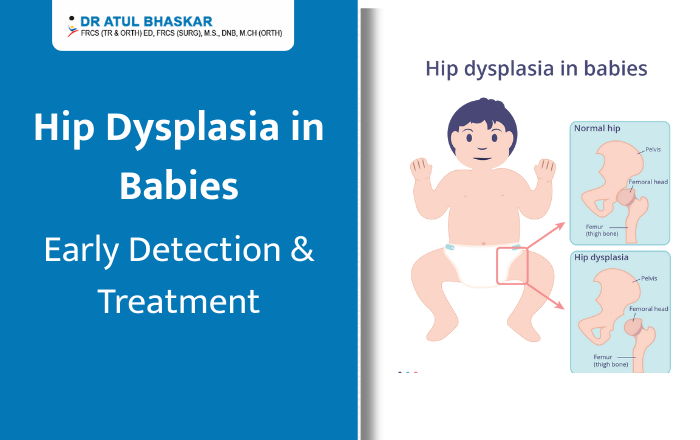
When you’re changing your baby’s diaper and notice one leg looks shorter than the other, or the skin folds don’t match up, it’s natural to feel worried. These could be early signs of hip dysplasia in babies—a condition where the hip joint doesn’t form properly.
But here’s the good news: when spotted early, hip dysplasia is highly treatable. Most babies who receive timely care grow up to run, jump, and play just like other children. This guide will help you understand what to look for and when to seek help.
Hip dysplasia in babies, also called Developmental Dysplasia of the Hip (DDH), happens when the hip joint doesn’t develop correctly. Think of a healthy hip as a ball sitting snugly in a socket. With hip dysplasia, the socket is too shallow, or the ball doesn’t fit properly. This can range from mild looseness to complete dislocation.
About 1-2 babies per 1,000 are born with this condition. Girls are four times more likely to have it than boys. The condition can develop before birth, during delivery, or in the first year of life.
Catching hip dysplasia early makes treatment easier. Watch for these signs during diaper changes:
1. Uneven skin folds – One thigh or buttock has more creases than the other
2. One leg looks shorter – When you bend both knees, one sits lower than the other
3. Limited hip movement – Difficulty spreading one leg to the side during diaper changes
4. Clicking sounds – You hear or feel a “clunk” when moving your baby’s legs
5. One foot turns out differently – The affected leg rotates outward more than the other
6. Uneven crawling or walking – Your child limps or favors one leg
7. Baby prefers one side – Doesn’t kick both legs equally or only rolls one direction
Remember: Not all babies with hip dysplasia show obvious signs. This is why regular check-ups with your pediatrician matter.
Several factors increase the risk of baby hip dysplasia:
You can help reduce risk by swaddling your baby with hips bent and free to move, and using baby carriers that support healthy hip positioning.
Your baby’s doctor will screen for hip dysplasia during regular visits. They’ll:
If something seems off, your doctor may recommend:
Studies show that early screening catches 90% of cases, leading to better results with simpler treatment.
The earlier hip dysplasia is found, the simpler the treatment. Here’s what to expect:
This is the most common treatment. The soft harness holds your baby’s hips in the correct position for 6-12 weeks. Success rate? An impressive 90-95% when started early.
Your baby can still move their legs and be held. Most parents say their little ones adjust within days.
If your baby is over 6 months old, a stiffer brace might be needed. It keeps the legs in a “frog-leg” position and is worn for several months.
If the harness doesn’t work, doctors can reposition the hip under anesthesia. Your baby will then wear a cast for 2-4 months.
Reserved for complex situations or late diagnosis. With proper surgical treatment, children still have excellent long-term outcomes.
Yes! With early treatment, over 95% of children with hip dysplasia lead completely normal, active lives. They participate fully in sports, dancing, and all childhood activities.
Most children who wear a harness as infants show no lasting effects. You’d never know they had the condition.
Many parents worry about daily care, but it’s manageable:
Don’t wait if you notice:
Hip dysplasia becomes harder to treat the longer it goes undiagnosed. Trust your instincts—if something feels wrong, get it checked.
If you’ve noticed signs of hip dysplasia in your baby, or your child has been diagnosed, getting proper medical care is crucial.
Dr. Atul Bhaskar, a Paediatric Orthopaedic Surgeon in Mumbai, specializes in treating hip dysplasia and other childhood conditions. With extensive experience in both harness treatment and surgical options when needed, Dr. Bhaskar helps families navigate this journey with confidence.
Why families choose Dr. Atul Bhaskar:
Your baby’s hip health is important. Early diagnosis and proper treatment mean your little one can grow up healthy, active, and pain-free.
Schedule a consultation with Dr. Atul Bhaskar today to get the answers and treatment your family needs.
Dr. Atul Bhaskar, one of the prominent Paediatric Orthopaedic Surgeon in India has graduated from Seth G S Medical College, Mumbai. After doing his M.S (Orth) from K.E.M. Hospital, he pursued further training in the United Kingdom. He was on the “Yorkshire Orthopaedic Training Program” and obtained his orthopaedic fellowship, FRCS (Orth) and Surgical fellowship, FRCS (Glasgow) degrees. He has received the M.Ch Orth form Liverpool.
© Copyright 2026 Dr. Atul Bhaskar | All rights reserved.
Designed By DMX Digital